
The First Five Minutes vs. the First Five Hours
Some instruments make an immediate impression. You pick them up and something instantly grabs your attention. Huge lows. Brilliant highs. An exceptionally low action. An extremely light body. An unusual shape or a spectacular piece of wood. There’s nothing wrong with that. First impressions matter — and sometimes they tell you that you’ve found something special.
But they don’t tell you everything. Because a great instrument also has to work after the first five minutes. From attraction to connection. The same applies to the way an instrument looks. Some guitars are designed to turn heads from across the room. Others use familiar shapes, colours and materials and reveal their personality more gradually. Neither approach is inherently better. Design is personal, and so is taste. But there is a difference between seeing an instrument and experiencing it.
Pick it up and details that weren’t obvious in a photograph start to matter. How naturally it sits against your body. How it balances on a strap. How easily your hands find their way around the instrument. How the controls respond. How the entire instrument feels as one coherent object rather than a collection of specifications. Small details can become surprisingly important once an instrument stops being something you look at and becomes something you play.
After the first five minutes
Sound can work in much the same way. An impressive amount of bottom end can sound fantastic when playing alone. Bright highs can create an immediate sense of detail. An exceptionally responsive instrument can be exciting from the very first note. But what happens an hour later? Or three hours into a rehearsal?
Can you hear yourself clearly without constantly turning up? Does the sound sit naturally with drums, guitars and keyboards? Does the instrument respond when you change your touch and dynamics? Does it give you room to shape the note rather than presenting you with one predetermined version of it?
And when the novelty has worn off, do you still want to pick it up? These are harder qualities to put on a specification sheet.
The player completes the instrument
Of course, players are different. Our bodies, hands, technique, musical background and preferences are different. What feels immediately right to one player may leave another completely unmoved. That also means there can be no single instrument that is objectively perfect for everyone. And that isn’t the ambition.
Yoshi Kikuchi’s approach is not about trying to accommodate every possible preference in one bass. Nor is it about telling players what the ideal bass should be. His philosophy is more subtle: make deliberate choices, avoid unnecessary extremes and try to create an instrument that leaves room for the player. That distinction matters.
An instrument will always have its own character. Its construction, materials, dimensions, pickups and electronics inevitably shape how it feels and sounds. The goal isn’t to make those characteristics disappear. It is to make them work together without one aspect unnecessarily dominating the others. The instrument provides the foundation. The player completes it.
Refinement rather than reinvention
This is where Yoshi’s philosophy of refinement becomes particularly visible. A Kikuchi bass may not stop everyone in their tracks from across the room. The basic visual language is deliberately familiar. Yoshi isn’t trying to reinvent the electric bass simply for the sake of making it look different. Instead, decades of building, repairing, studying and playing instruments have led him to reconsider countless details within that familiar concept. Some are visible. Many are not.
A contour, a dimension, the way different parts of the instrument interact, its balance and construction, pickup placement, electronics — choices that individually may appear relatively small but together determine how the instrument behaves. We call these refinements. They are not presented as universal answers. They are Yoshi’s choices, based on his experience and his ideas about what makes an instrument work as a whole. And ultimately, the player decides whether those choices feel right.
Leaving room for the player
Perhaps that is the important difference between an instrument having character and an instrument imposing itself. A Kikuchi certainly has a character of its own. It should. But Yoshi’s aim is not to dictate what you should sound like with it. His instruments are designed to provide a balanced and responsive foundation, leaving room for the person holding them — their touch, timing, dynamics, musical choices and imagination. And perhaps that’s also why some qualities of an instrument only become apparent with time.
The little details start adding up. Things you hardly noticed during those first few minutes become increasingly important. The way the instrument responds to a softer touch. How naturally it sits in a mix. How comfortable it remains during a long rehearsal or gig. Or simply how little you find yourself thinking about the instrument while you’re making music. That relationship isn’t something you can fully judge from a photograph, a specification sheet or even the first spectacular note.
Sometimes it takes a little longer.
The first five minutes may tell you whether a bass attracts you. The next five hours tell you whether you and the instrument have something to say together. A great instrument doesn’t have to speak for you. It should give you room to speak in your own language.
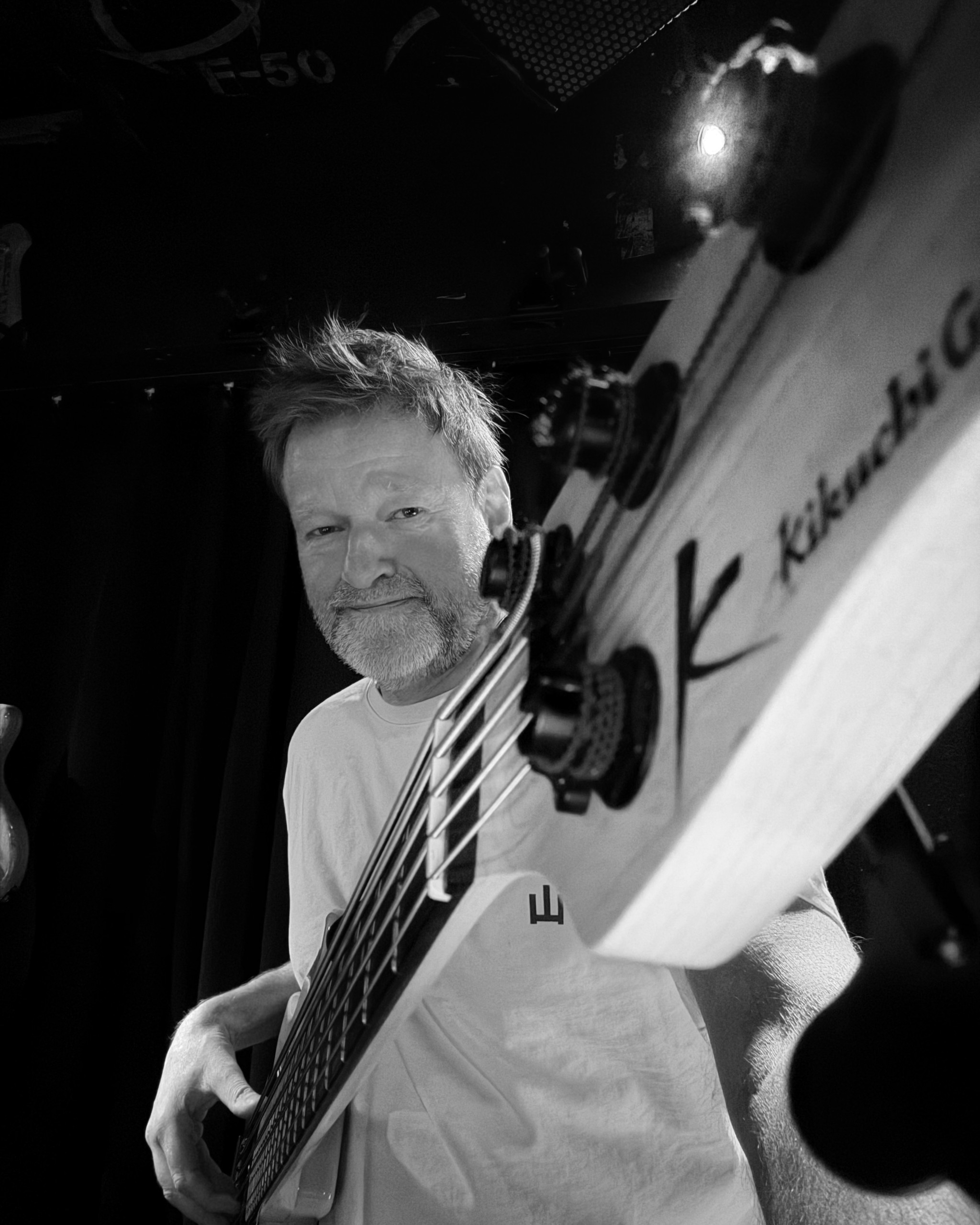
The First Five Minutes vs. the First Five Hours
Some instruments make an immediate impression. You pick them up and something instantly grabs your attention. Huge lows. Brilliant highs. An exceptionally low action. An extremely light body. An unusual shape or a spectacular piece of wood. There’s nothing wrong with that. First impressions matter — and sometimes they tell you that you’ve found something special.
But they don’t tell you everything. Because a great instrument also has to work after the first five minutes. From attraction to connection. The same applies to the way an instrument looks. Some guitars are designed to turn heads from across the room. Others use familiar shapes, colours and materials and reveal their personality more gradually. Neither approach is inherently better. Design is personal, and so is taste. But there is a difference between seeing an instrument and experiencing it.
Pick it up and details that weren’t obvious in a photograph start to matter. How naturally it sits against your body. How it balances on a strap. How easily your hands find their way around the instrument. How the controls respond. How the entire instrument feels as one coherent object rather than a collection of specifications. Small details can become surprisingly important once an instrument stops being something you look at and becomes something you play.
After the first five minutes
Sound can work in much the same way. An impressive amount of bottom end can sound fantastic when playing alone. Bright highs can create an immediate sense of detail. An exceptionally responsive instrument can be exciting from the very first note. But what happens an hour later? Or three hours into a rehearsal?
Can you hear yourself clearly without constantly turning up? Does the sound sit naturally with drums, guitars and keyboards? Does the instrument respond when you change your touch and dynamics? Does it give you room to shape the note rather than presenting you with one predetermined version of it?
And when the novelty has worn off, do you still want to pick it up? These are harder qualities to put on a specification sheet.
The player completes the instrument
Of course, players are different. Our bodies, hands, technique, musical background and preferences are different. What feels immediately right to one player may leave another completely unmoved. That also means there can be no single instrument that is objectively perfect for everyone. And that isn’t the ambition.
Yoshi Kikuchi’s approach is not about trying to accommodate every possible preference in one bass. Nor is it about telling players what the ideal bass should be. His philosophy is more subtle: make deliberate choices, avoid unnecessary extremes and try to create an instrument that leaves room for the player. That distinction matters.
An instrument will always have its own character. Its construction, materials, dimensions, pickups and electronics inevitably shape how it feels and sounds. The goal isn’t to make those characteristics disappear. It is to make them work together without one aspect unnecessarily dominating the others. The instrument provides the foundation. The player completes it.
Refinement rather than reinvention
This is where Yoshi’s philosophy of refinement becomes particularly visible. A Kikuchi bass may not stop everyone in their tracks from across the room. The basic visual language is deliberately familiar. Yoshi isn’t trying to reinvent the electric bass simply for the sake of making it look different. Instead, decades of building, repairing, studying and playing instruments have led him to reconsider countless details within that familiar concept. Some are visible. Many are not.
A contour, a dimension, the way different parts of the instrument interact, its balance and construction, pickup placement, electronics — choices that individually may appear relatively small but together determine how the instrument behaves. We call these refinements. They are not presented as universal answers. They are Yoshi’s choices, based on his experience and his ideas about what makes an instrument work as a whole. And ultimately, the player decides whether those choices feel right.
Leaving room for the player
Perhaps that is the important difference between an instrument having character and an instrument imposing itself. A Kikuchi certainly has a character of its own. It should. But Yoshi’s aim is not to dictate what you should sound like with it. His instruments are designed to provide a balanced and responsive foundation, leaving room for the person holding them — their touch, timing, dynamics, musical choices and imagination. And perhaps that’s also why some qualities of an instrument only become apparent with time.
The little details start adding up. Things you hardly noticed during those first few minutes become increasingly important. The way the instrument responds to a softer touch. How naturally it sits in a mix. How comfortable it remains during a long rehearsal or gig. Or simply how little you find yourself thinking about the instrument while you’re making music. That relationship isn’t something you can fully judge from a photograph, a specification sheet or even the first spectacular note.
Sometimes it takes a little longer.
The first five minutes may tell you whether a bass attracts you. The next five hours tell you whether you and the instrument have something to say together. A great instrument doesn’t have to speak for you. It should give you room to speak in your own language.